

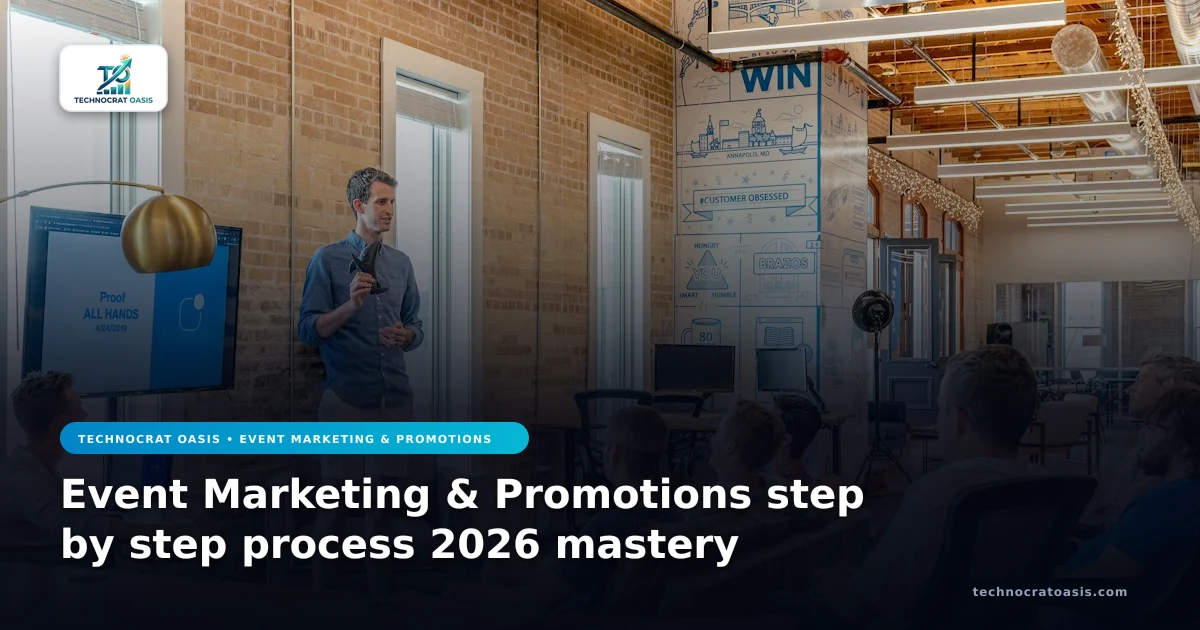
Introduction to Event Marketing & Promotions in 2026
Executing high-impact corporate gatherings, product launches, and brand activations requires far more than booking a venue and sending out digital calendar invites. In the hyper-competitive commercial environment of 2026, brands must navigate intricate logistical frameworks, regulatory compliances, digital registration architectures, and multi-channel promotional funnels to capture attention. Whether you are scaling an MSME or orchestrating a national enterprise summit, mastering the execution lifecycle is paramount for measurable ROI.
Professional Event Marketing & Promotions services bridge the gap between abstract brand vision and quantifiable audience conversion. From initial strategic roadmap formulation to advanced data-driven post-event analytics, organizations must adopt a rigorous, step-by-step methodology. This comprehensive guide details the precise operational workflows, document requirements, financial matrices, and compliance guardrails necessary to execute flawless campaigns this year.
Executive Key Takeaways
- End-to-End Execution: Comprehensive management spans ideation, budgeting, stakeholder coordination, live promotion, and post-event analytics.
- Digital-First Registration: Modern event marketing requires secure, scalable online registration gateways integrated with CRM systems.
- Regulatory Compliance: Securing proper municipal permits, venue clearances, and tax compliance (such as GST on ticketing) is mandatory.
- Data-Driven ROI: Modern promotional campaigns leverage advanced attribution models to track attendee engagement and lead generation velocity.
Eligibility Framework, Prerequisites & Documentation Checklist
Before launching any corporate event or commercial promotion campaign, stakeholders must establish organizational eligibility, secure statutory approvals, and compile a robust documentation matrix. Failure to meet compliance standards can result in hefty municipal penalties, venue cancellation, or legal liability.
Organizations must verify their entity status via official portals such as the Ministry of Corporate Affairs (MCA) for corporate compliance, or the Ministry of Micro, Small and Medium Enterprises (MSME) for eligible business subsidies. Below is the master documentation checklist required for executing large-scale public and corporate events.
| Document Category | Specific Requirement | Purpose & Compliance Authority |
|---|---|---|
| Entity Verification | Certificate of Incorporation / Udyam Registration | Validates legal business standing for vendor contracts and liability. |
| Tax Compliance | GST Registration Certificate | Mandatory for ticketing sales, corporate sponsorships, and vendor invoicing. |
| Venue Clearances | Municipal NOC, Fire Safety & Police Permissions | Ensures public safety compliance for physical events and gatherings. |
| Intellectual Property | Trademark & Copyright Licenses | Protects event branding, logos, promotional collateral, and media assets. |
| Financial Security | Public Liability Insurance & Indemnity Bonds | Mitigates financial risk against property damage or attendee injury. |
Step-by-Step Implementation Roadmap
Executing an elite event promotion strategy requires a disciplined, chronological roadmap. The following phase-by-phase framework outlines the exact operational milestones required to move from initial concept to post-event lead conversion.
Phase 1: Strategic Ideation and Feasibility Analysis
Begin by defining core event objectives, target audience demographics, and financial parameters. Establish whether the event will be physical, virtual, or hybrid. During this phase, utilize market research tools and consult with expert event strategists to align promotional messaging with overarching business goals.
Phase 2: Budgeting, Financial Structuring & Vendor Allocation
Construct a granular budget accounting for venue rentals, technical infrastructure, speakers, hospitality, and digital advertising spend. Allocate contingency funds (typically 15-20%) for unforeseen logistical hurdles. Finalize contracts with AV technicians, caterers, and promotional staffing agencies.
Phase 3: Digital Registration & Omnichannel Promotion Setup
Deploy a friction-free online registration system. Integrate secure payment gateways that comply with regional tax codes (including appropriate GST calculations). Concurrently, launch multi-channel promotional campaigns spanning targeted social media ads, email marketing sequences, PR outreach, and strategic influencer partnerships.
Phase 4: Live Event Orchestration & Brand Activation
Manage on-site and virtual operations with absolute precision. Coordinate guest check-ins, oversee technical cueing, manage press relations, and execute interactive brand activation booths designed to maximize audience engagement and immediate lead capture.
Phase 5: Post-Event Analysis, Attribution & Lead Nurturing
Do not let momentum die when the venue lights turn off. Aggregate attendee data, engagement metrics, and feedback surveys. Feed qualified leads directly into your CRM for immediate sales follow-up and measure overall campaign ROI against initial financial projections.
Cost Analysis, Subsidies & Financial ROI Breakdown
Budget allocation for event marketing varies widely depending on scale, format, and geographical reach. Understanding the cost structures and identifying potential government subsidies or enterprise grants is essential for optimizing capital expenditure.
Many MSMEs qualify for state-level industrial promotion subsidies or export promotion council grants when organizing international trade exhibitions. Below is a comparative financial breakdown of standard event tiers and their typical return on investment (ROI) metrics.
| Event Tier | Estimated Budget Range | Primary Cost Drivers | Expected ROI / Business Impact |
|---|---|---|---|
| Corporate Meet / Internal Summit | $5,000 - $15,000 | Venue, AV tech, catering, speaker fees | High internal alignment, employee retention, brand synergy |
| Product Launch & Press Event | $15,000 - $50,000 | PR outreach, staging, media kits, influencer tie-ups | Immediate market buzz, high media coverage, rapid initial sales |
| Exhibition & Trade Show Booth | $10,000 - $35,000 | Booth design, logistics, on-ground promotional staff | High-intent B2B lead generation, direct partnership closures |
| Large-Scale Enterprise Conference | $50,000 - $200,000+ | Multi-day venue, international speakers, massive digital ad spend | Dominant industry positioning, enterprise pipeline expansion |
Critical Mistakes & Compliance Risk Prevention
Even seasoned marketing teams fall into predictable operational traps that can compromise event success and expose the organization to legal or financial penalties. Avoiding these pitfalls requires rigorous oversight.
- Neglecting Municipal & Safety Permitting: Failing to secure timely fire, police, or local municipal clearances can result in on-site shutdowns and severe legal liabilities. Always initiate permit applications at least 60 days prior to the event date.
- Flawed Online Registration Architecture: Using sluggish or non-secure registration portals frustrates attendees and drives up bounce rates. Ensure your registration funnel is mobile-optimized and fully encrypted.
- Vague Budgetary Contingencies: Underestimating logistical creep and last-minute vendor expenses will quickly drain marketing reserves. Maintain a strict 15-20% buffer.
- Ignoring Post-Event Data Utilization: Collecting attendee contact information without immediate CRM integration and prompt follow-up sequence results in ice-cold leads and wasted promotional spend.
Frequently Asked Questions
1. What is included in comprehensive Event Marketing & Promotions services?
Comprehensive services cover end-to-end strategic planning, budget management, venue selection, digital registration setup, omnichannel advertising campaigns, influencer partnerships, on-site brand activations, and detailed post-event ROI analytics.
2. How early should we begin planning a major product launch or corporate event?
For large-scale events, you should begin planning and securing permits 4 to 6 months in advance. This ensures adequate time for venue booking, regulatory approvals, and sustained promotional campaign rollouts.
3. Are there specific document requirements for public event promotions?
Yes. Public events require municipal NOCs, fire safety clearances, sound permits, public liability insurance policies, and proper GST compliance documentation for ticketing and sponsorships.
4. How do online registration systems improve event marketing success?
Secure online registration gateways streamline attendee data collection, facilitate seamless payment processing, integrate directly with CRM software, and provide real-time analytics on ticket sales and audience demographics.
5. Can MSMEs claim government subsidies for trade exhibitions and promotions?
Yes, various central and state government schemes offer financial assistance, marketing subsidies, and reimbursement models for MSMEs participating in recognized domestic and international trade shows.
6. How is the ROI of an event marketing campaign calculated?
ROI is measured by comparing total net revenue generated from event-sourced leads and sales against the overall expenditure, factoring in brand equity lift, media impressions, and customer acquisition cost.
Ready to Elevate Your Next Corporate Event?
Partner with our industry-leading experts to craft high-impact promotional campaigns, seamless registration funnels, and unforgettable brand experiences.
Book Your Strategy Consultation