


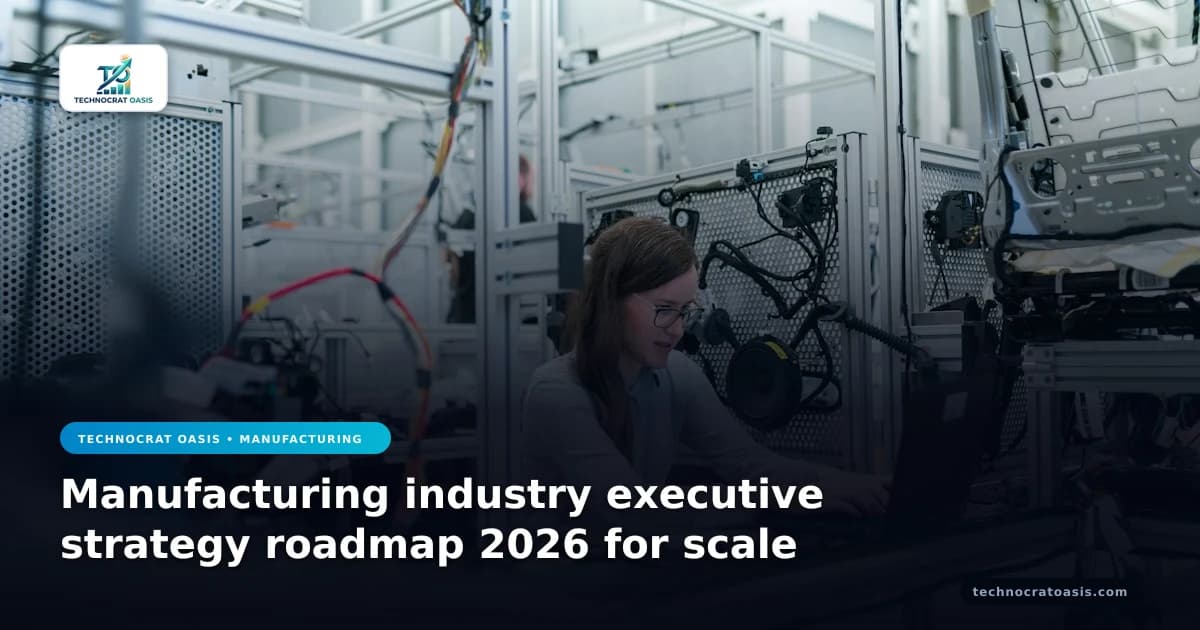
By 2026, the manufacturing industry is projected to grow at a CAGR of 5.5%, driven by smart technology integration. This executive strategy roadmap provides a detailed playbook for scaling operations, leveraging advanced software solutions, and achieving operational excellence.
Executive Summary & Key Takeaways
The manufacturing landscape is evolving rapidly, with Industry 4.0 technologies reshaping production, inventory, and supply chain management. To stay competitive, executives must adopt a strategic approach to technology integration, compliance, and scaling. Below is a concise executive summary:
Key Takeaways:
- Smart Technology Integration: ERP, IoT, and predictive analytics are critical for efficiency.
- Compliance & Licensing: Stay updated with regulations to avoid penalties.
- Strategic Scaling: Leverage data-driven insights for sustainable growth.
- Cost Optimization: Automate workflows to reduce operational costs.
Eligibility Framework & Document Checklist
Before embarking on digital transformation, ensure your manufacturing business meets the eligibility criteria and has the necessary documents. Below is a structured table for reference:
| Requirement | Details | Mandatory |
|---|---|---|
| Business Registration | MSME/Udyog Aadhaar registration | Yes |
| Compliance Certificates | ISO, GST, and labor law compliance | Yes |
| Financial Statements | Audited balance sheets (last 3 years) | Yes |
| Technology Assessment | Current IT infrastructure audit | No |
For detailed guidelines, refer to the official MSME portal.
Step-by-Step Implementation Roadmap
Scaling manufacturing operations with smart technology requires a phased approach. Below is a chronological roadmap:
Phase 1: Assessment & Planning (Months 1-3)
- Conduct a Technology Audit: Evaluate existing systems and identify gaps.
- Define Objectives: Set clear KPIs for efficiency, cost reduction, and scalability.
- Budget Allocation: Estimate costs for software, hardware, and training.
Phase 2: Implementation & Integration (Months 4-9)
- ERP Deployment: Roll out integrated ERP solutions for streamlined operations.
- IoT Setup: Install smart sensors and devices for real-time monitoring.
- Training Programs: Upskill employees on new technologies.
Phase 3: Optimization & Scaling (Months 10-18)
- Data Analytics: Leverage analytics platforms for actionable insights.
- Predictive Maintenance: Implement IoT-based maintenance schedules.
- Expansion Planning: Scale solutions across multiple production lines.
Cost Analysis, Subsidies & ROI Breakdown
Understanding the financial implications is crucial for strategic scaling. Below is a cost comparison table:
| Component | Cost Range | Potential Subsidies |
|---|---|---|
| ERP Software | $50,000 - $200,000 | Up to 30% under MSME schemes |
| IoT Infrastructure | $30,000 - $100,000 | 15% subsidy for smart factories |
| Training Programs | $10,000 - $30,000 | 50% reimbursement for employee training |
For subsidy details, visit the Startup India portal.
Critical Mistakes & Compliance Risk Prevention
Avoiding common pitfalls is essential for a successful transformation. Here are the top mistakes to avoid:
- Ignoring Compliance: Failure to update licenses can result in hefty fines.
- Overlooking Employee Training: Inadequate training leads to underutilization of technology.
- Skipping Data Security: Lack of cybersecurity measures exposes sensitive data.
- Underestimating ROI Timeline: Expecting immediate returns can lead to premature abandonment.
Mitigate risks by conducting regular compliance audits and investing in cybersecurity solutions.
High-Intent FAQs & Expert Consultation CTA
FAQs
- Q: What is the first step in transforming manufacturing operations?
A: Conduct a comprehensive technology audit to identify gaps and set clear objectives. - Q: How can I reduce costs during digital transformation?
A: Leverage subsidies from MSME schemes and automate key workflows to cut operational costs. - Q: What are the key compliance requirements for manufacturing?
A: Ensure ISO, GST, and labor law compliance, and regularly update licenses. - Q: How long does it take to see ROI from smart technology integration?
A: Typically, ROI is realized within 12-18 months, depending on the scale of implementation. - Q: What role does IoT play in manufacturing?
A: IoT enables real-time monitoring, predictive maintenance, and efficient resource management.
Ready to transform your manufacturing operations? Contact our experts for a tailored strategy and seamless implementation.
