


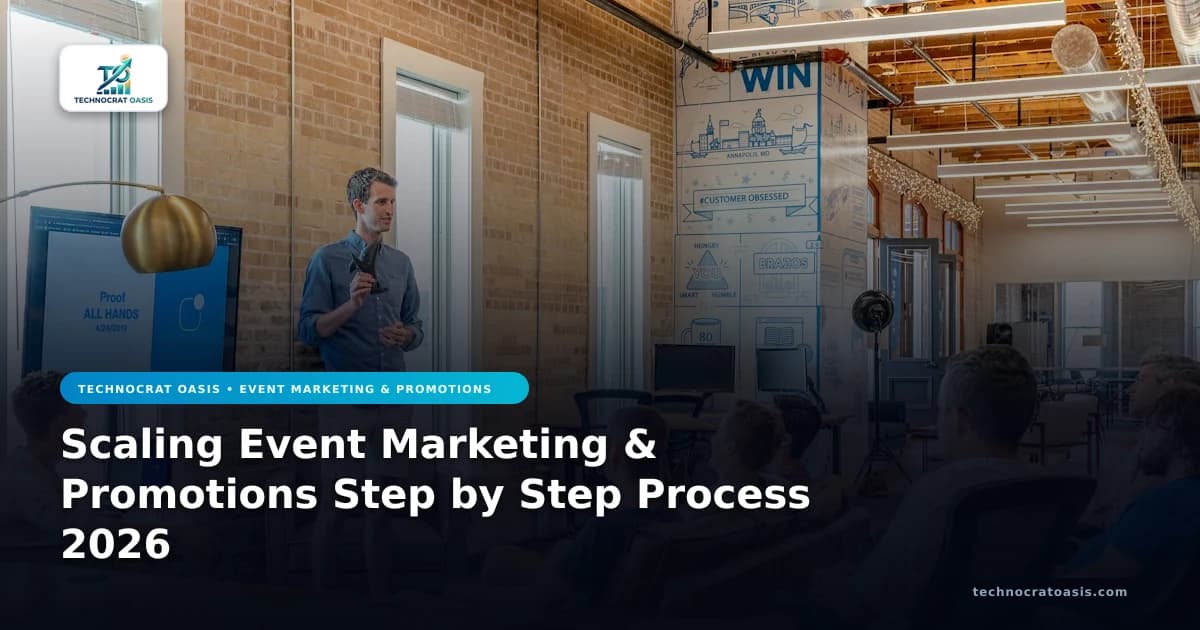
Enterprise event marketing has evolved far beyond traditional ballroom gatherings and superficial brand awareness campaigns. In 2026, high-growth businesses and agile MSMEs recognize that physical activations, hybrid corporate summits, and experiential product launches require an exhaustive, compliance-driven framework to generate measurable pipeline growth. Executing a high-impact rollout without a structured blueprint leads to inflated customer acquisition costs, fractured stakeholder engagement, and wasted capital. This comprehensive manual breaks down the exact operational roadmap required to scale your brand activations and corporate gatherings efficiently.
Executive Key Takeaways
- Strategic Alignment: Enterprise event marketing demands tight integration between experiential on-ground engagement and multichannel digital promotion.
- Operational Phasing: Execution must be divided into rigid milestones—from initial thematic ideation and vendor contracting to post-event lead attribution.
- Compliance & Budgets: Modern activations require strict adherence to local venue licensing, safety protocols, and transparent ROI attribution models.
- End-to-End Execution: Utilizing specialized Event Marketing & Promotions Services eliminates operational bottlenecks and guarantees professional oversight.
Understanding the Event Marketing & Promotions Ecosystem
Modern event marketing operates at the intersection of psychology, digital media, and physical logistics. Whether you are orchestrating a multi-city product launch, a high-stakes trade show exhibition, or an intimate B2B executive dinner, the foundational objective remains identical: converting fleeting audience attention into sustained commercial pipeline. Enterprises that fail to treat events as revenue-generating assets frequently experience poor attendee retention and negligible post-event conversions.
To capture market share in 2026, promotional strategies must leverage hyper-targeted digital advertising, influencer partnerships, and proprietary registration platforms. Relying solely on organic attendance or word-of-mouth no longer suffices in competitive verticals. Professional execution demands structured oversight of every phase, ensuring that brand messaging remains consistent across physical stages and digital screens.
Eligibility, Documentation & Prerequisite Framework
Before launching any corporate event or public promotional campaign, internal stakeholders and founders must establish a rigorous compliance checklist. Operating without proper documentation or venue permits can result in catastrophic shutdowns, severe financial penalties, and irreversible brand damage.
Core Operational Checklist for Enterprise Events
Every commercial activation requires verification across multiple legal, technical, and logistical categories. The table below outlines the mandatory documentation and prerequisites necessary to maintain full operational compliance during your next event rollout.
| Requirement Category | Mandatory Document / Asset | Operational Purpose |
|---|---|---|
| Venue & Permitting | Municipal No-Objection Certificate (NOC) & Fire Safety Clearance | Ensures public safety compliance and legal occupancy rights for large gatherings. |
| Commercial Agreement | Executed Vendor & Venue Service Level Agreements (SLAs) | Protects enterprise capital against vendor default, logistical delays, and equipment failure. |
| Digital Compliance | GDPR/CCPA Compliant Registration & Data Privacy Policy | Safeguards attendee personal identifiable information (PII) collected during online ticketing. |
| Intellectual Property | Music Performance Licensing & Trademark Clearances | Prevents copyright infringement fines during live stage performances and promotional videos. |
Step-by-Step Implementation Roadmap (2026)
Executing an enterprise-grade event requires strict adherence to a chronological roadmap. Rushing through initial strategy formulation or neglecting post-event attribution will severely diminish your return on investment.
Phase 1: Conceptualization, Theming & Target Audience Profiling
Begin by defining the core business objective of your event. Are you aiming to close enterprise sales, onboard developers, or unveil a disruptive technology? Crafting a distinct theme sets the tone for all subsequent collateral. Build granular ideal customer profiles (ICPs) to ensure attendee acquisition efforts focus strictly on high-intent decision-makers rather than vanity metrics.
Phase 2: Budget Allocation & Resource Modeling
Establish a transparent financial model that accounts for venue acquisition, AV production, digital advertising, catering, speaker fees, and emergency contingency reserves. Utilizing professional guidance ensures you avoid hidden logistical expenses that typically erode profit margins.
Phase 3: Omnichannel Promotion & Digital Registration Setup
Deploy a high-converting online registration portal supported by targeted paid search campaigns, email sequences, and strategic influencer collaborations. Leverage programmatic advertising and social media channels to amplify reach and drive qualified ticket sales or RSVP conversions weeks in advance of the live date.
Phase 4: On-Ground Execution & Live Brand Activation
On the day of the event, precision is paramount. Manage attendee check-ins smoothly, oversee technical AV setups, coordinate media representatives, and facilitate interactive brand activation booths. Every physical touchpoint must actively reinforce your core brand narrative.
Phase 5: Post-Event Attribution & Lead Nurturing
The event lifecycle does not end when the venue lights turn off. Immediately ingest attendee data into your CRM, deploy personalized follow-up sequences within 24 to 48 hours, and analyze aggregate engagement metrics to calculate precise ROI and cost-per-acquisition figures.
Cost Analysis, Subsidies & Financial ROI Framework
Enterprise event budgeting requires a clear understanding of fixed versus variable expenses. While physical activations command significant upfront capital, their ability to accelerate sales cycles often yields a remarkably high lifetime customer value (LTV).
Organizations should also explore government grants, trade association subsidies, and export promotion council grants that occasionally offset exhibition and trade show participation expenses in international markets. Evaluating these financial mechanisms reduces net operational expenditure.
| Expense Element | Estimated Budget Allocation (%) | Cost-Optimization Strategy |
|---|---|---|
| Venue & Hospitality | 35% - 40% | Negotiate multi-event contracts early; lock in corporate discounting tiers. |
| Digital Promotions & Ads | 20% - 25% | Focus spend on high-intent retargeting and niche B2B professional channels. |
| Production & Technology | 20% - 25% | Partner with modular booth builders; reuse staging assets across multiple roadshows. |
| Contingency & Reserves | 10% - 15% | Isolate funds strictly for unexpected logistics surcharges and emergency staffing. |
Critical Mistakes & Compliance Risk Prevention
Even seasoned marketing teams frequently stumble when executing complex promotional campaigns. Avoiding common operational pitfalls protects your budget and preserves your corporate reputation.
- Neglecting Early Permitting: Waiting until the final weeks to secure municipal licenses or fire safety clearances can lead to forced event cancellations.
- Ignoring Data Privacy Laws: Collecting attendee contact details without explicit opt-in consent violates global data protection regulations, inviting steep penalties.
- Poor Lead Follow-Up: Storing attendee business cards in spreadsheets without immediate CRM integration results in cold leads and wasted sponsorship dollars.
- Failing to Stress-Test Technology: Overlooking internet bandwidth limitations during live streaming or digital check-ins creates frustrating bottlenecks for participants.
Mitigating these risks requires partnering with experienced professionals who understand the intricate nuances of enterprise event logistics and compliance management.
High-Intent FAQs & Expert Consultation
What is the typical timeline required to plan and execute a major corporate event?
A comprehensive enterprise event generally requires 3 to 6 months of advanced planning. This window ensures adequate time for venue procurement, speaker curation, digital marketing campaigns, and mandatory municipal permit approvals.
How do you measure the true ROI of brand activation events?
ROI is calculated by tracking direct event-sourced pipeline revenue, closed-won deals attributed to attendee lists, cost-per-acquisition (CPA), and qualitative brand lift metrics gathered via post-event surveys and media impressions.
Are digital marketing campaigns essential for physical corporate events?
Yes. Omnichannel digital promotion—including targeted paid search, social media advertising, and email marketing—is vital for driving qualified registration volumes and maximizing room or booth occupancy.
What documents are mandatory for hosting large public gatherings?
Mandatory documentation typically includes municipal event permits, fire safety clearances, local law enforcement NOCs, venue vendor contracts, and copyright licenses for any broadcasted music or media.
How can outsourced agencies improve event success rates?
Outsourced specialists bring specialized vendor networks, crisis management expertise, technical production proficiency, and rigorous data analytics frameworks that internal teams rarely possess in-house.
Ready to Elevate Your Brand Presence?
Transform your upcoming product launches and corporate summits into high-converting business assets. Explore our professional Event Marketing & Promotions Services today and partner with industry veterans.
Schedule Your Strategy Consultation